Piekary Śląskie is a city inhabited by over 50 thousand people, with an area of 39.98 square kilometres. The name probably originated from bakers who baked bread for the duke’s castle in Bytom.
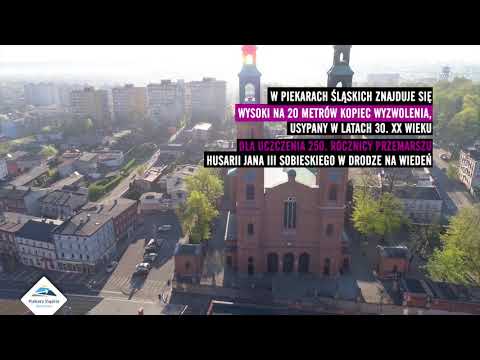
In Piekary Śląskie, there is a 20-metre high Liberation Mound built in the 1930s to commemorate the 250th anniversary of the march of the Hussars of Jan III Sobieski on his way to Vienna and the 15th anniversary of the incorporation of Upper Silesia into Poland. Today, it is a place of numerous cultural events and meetings of the city’s residents.
Piekary Śląskie is Poland’s second to Jasna Góra and the largest in the Silesian Province pilgrimage destination connected with the Marian cult. This tradition in the city dates back to the 12th century and is associated with the blessed Picture of Our Lady of Piekary. One of the city’s landmarks is the centrally located High Basilica. It is the pilgrimage destination for men and women who come here from all over Poland. It was also in the Piekary basilica that Jan III Sobieski prayed for victory before the battle of Vienna against the army of Grand Vizier Kara Mustafa.
Polish national football team goalkeeper, Adam Matysek, who also used to play, among others, in Bayer 04 Leverkusen, was born in Piekary Śląskie. Mateusz Kus, a Polish handball player and participant in the Rio de Janeiro Olympic Games, also comes from this city.
One of the most characteristic landmarks of Piekary Śląskie is the Liberation Mound.


 Up to date
 Piekary Śląskie


 Load more